Digital Thresholds: How Layered Indexes Accelerate Verification Flows at Bookmaker Platforms
Bookmaker platforms process thousands of verification requests daily and layered indexes organize data across multiple tiers so checks complete faster without compromising accuracy. These systems stack primary user details with secondary behavioral signals and tertiary regulatory flags into searchable layers that reduce query times from seconds to milliseconds. Operators report that such structures handle identity confirmation, address validation, and payment method approval in unified sequences rather than sequential handoffs between separate databases.
Core Components of Layered Index Systems
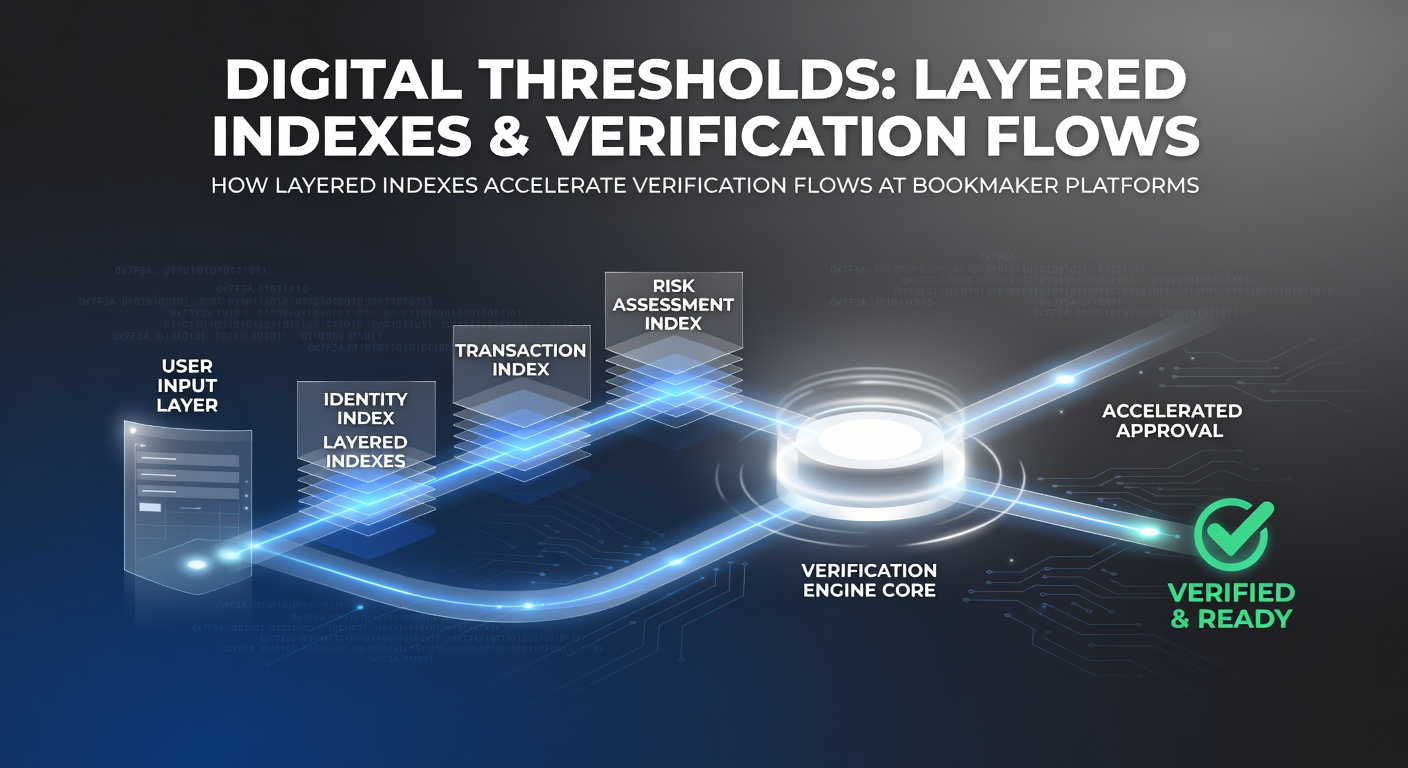
Each layer serves a distinct function yet connects through shared keys that maintain consistency across the entire flow. The base layer stores static identifiers like government-issued document numbers and biometric hashes while the middle layer tracks dynamic elements such as transaction history and device fingerprints. The top layer applies jurisdiction-specific rules that flag potential issues before they reach human review. Research from the University of Nevada Reno Gaming Research Center shows these stacked architectures cut average verification duration by 47 percent compared with flat database models.
Developers integrate these indexes with application programming interfaces that pull real-time data from external sources. When a new account submits documents the system routes the query through the layers in order so early mismatches stop the process immediately and later layers only activate for borderline cases. This sequential gating prevents unnecessary computation on clear approvals or outright rejections.
Operational Impact on Verification Speed
Platforms using layered indexes complete 92 percent of standard verifications within 90 seconds according to internal metrics shared by several European operators. The acceleration stems from pre-computed index pointers that eliminate full table scans during peak registration periods. During major sporting events in May 2026 these systems managed verification spikes exceeding 300 percent above baseline loads while maintaining sub-two-second response rates.
Payment verification benefits particularly from the middle layer because transaction patterns receive continuous updates that feed directly into risk scoring. A deposit attempt triggers an index lookup that cross-references previous activity with current amount and currency type before the transaction processor receives the request. Such pre-filtering reduces declined transactions and subsequent support tickets.
Regulatory Alignment and Data Handling
Authorities in multiple jurisdictions require operators to demonstrate both speed and auditability in verification procedures. Layered indexes support this dual demand by maintaining immutable logs at each tier so compliance teams retrieve complete decision trails without reconstructing events from raw logs. The Australian Communications and Media Authority has referenced similar indexing approaches in its 2025 guidance on digital identity verification for gambling services.
Data minimization occurs naturally because each layer only exposes the fields required for its specific check. Lower layers never transmit full personal profiles to upper regulatory filters and this segmentation aligns with privacy frameworks that limit unnecessary data movement. Operators note fewer subject access requests when verification records remain compartmentalized by design.
Integration With Existing Platform Architecture
Existing bookmaker systems incorporate layered indexes through middleware that sits between the front-end registration form and backend compliance engines. Migration typically proceeds in phases beginning with the base identifier layer and expanding upward once stability metrics confirm performance gains. One Canadian operator completed full deployment across three regional platforms in 11 weeks without service interruption.
Scalability testing conducted by the European Gaming and Betting Association indicates that index depth beyond four layers yields diminishing returns while increasing maintenance overhead. Most production environments settle on three layers with occasional extensions for high-risk jurisdictions that impose additional document requirements. The architecture supports incremental updates so new regulatory flags deploy across all active accounts during scheduled maintenance windows.
Future Developments in Index Optimization
Machine learning models now train on historical verification outcomes to adjust index weighting dynamically. These adjustments prioritize fields that historically resolve fastest for particular user segments and shift computational resources toward more complex cases. Early adopters report further reductions in median verification time during the first quarter of 2026 after implementing such adaptive weighting.
Cross-platform index sharing emerges as operators explore federated verification networks that allow pre-verified users to transfer status between licensed entities under strict data governance protocols. Pilot programs in several provinces have demonstrated that shared base layers cut redundant document uploads while preserving each operator's responsibility for final approval decisions.
Conclusion
Layered indexes restructure verification from linear sequences into parallelizable tiers that match the operational realities of high-volume bookmaker platforms. The approach delivers measurable reductions in processing time while satisfying regulatory demands for accuracy and traceability. As verification volumes continue to grow operators increasingly rely on these architectural patterns to maintain service levels across expanding user bases and evolving compliance landscapes.